Bid your tricks, then take them
Spades is a for four players in two teams. Before each hand you and your partner promise a number of ; then you try to win at least that many. Spades are always .
Easy to learn, with real tactics once you get into it.
Promise a number of tricks with your partner, then take exactly that many. Spades beat everything.
Spades is a for four players in two teams. Before each hand you and your partner promise a number of ; then you try to win at least that many. Spades are always .
Easy to learn, with real tactics once you get into it.
Four players form two . Your partner sits across from you, so the teams alternate around the table.
You and North play against West and East.
The dealer deals the whole deck one card at a time, starting on their left, until everyone has 13 cards. Sort your hand by suit.
In this example you are the dealer, so West plays first.
Starting left of the dealer, each player makes one : the number of tricks they expect to win, from 0 to 13. Nobody may pass.
Partners add their bids into one . You bid 4 and North bids 3, so your team needs 7 tricks. West and East bid 3 each: 6 tricks.
Count your sure winners: aces, protected kings and high spades.
Your partner is counting on this number.
West the first trick with any card except a spade: the 9 of hearts. Going clockwise, everyone must if they can.
North plays the king, East the 4, and you win with the ace of hearts. The highest card of the suit that was led takes the trick.
You collect the four cards face down in front of your team. Whoever wins a trick leads the next one.
That is one trick for your team, six to go.
You lead the queen of diamonds. West follows with the 3. North has no diamonds left, so North may play anything, and chooses the 2 of spades. East plays the king of diamonds.
Because spades are , even the lowest spade beats every diamond. North wins the trick for your team.
At the start of a hand you may not lead a spade. That rule lifts once a spade has been played on another suit, as North just did. This is called .
From now on anyone may lead spades. A player holding only spades may always lead one.
A player may bid : zero tricks. Take none and your team scores 100 extra points. Take even one and your team loses 100.
Tricks won by a nil bidder do not count toward the partner’s bid, but they do count as bags.
Low cards only. And steady nerves.
After all 13 tricks, each team scores:
| Contract made | 10 × bid |
| Each extra trick (a bag) | +1 |
| Contract missed | −10 × bid |
| Every 10 bags collected | −100 |
Your team bid 7 and took 8: 70 + 1 = 71, with 1 . West and East bid 6 and took 5: −60.
Some tables score a missed contract as 0 instead of a minus.
Pass the deal to the left and play hands until a team reaches 500 points. That team wins.
For a short game, play to 200.
Point at a dot to see why it matters
Four, in two partnerships. Partners sit opposite each other.
No. The first lead may be any card except a spade, and spades cannot be led until a spade has been played on another suit, unless the leader holds only spades.
Tricks won above your team’s contract. Each is worth 1 point, but every 10 bags costs your team 100 points.
A bid of zero tricks. If the bidder takes no tricks, the team scores 100; if they take any, the team loses 100.
 The classic
The deck most people picture. Poker size, standard faces, shuffles well. If you buy one deck, make it this.

 Lasts for years
Two 100% plastic decks in a hard case. Washable and hard to bend, and a double deck is what Canasta and Spider need.
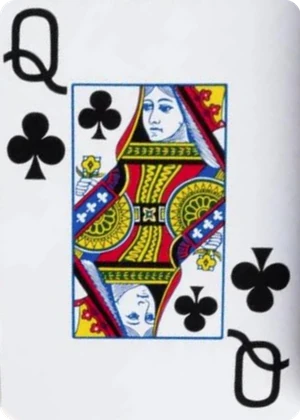 Easy to read
Extra-large numbers and suits. Readable across the table, for kids learning their first game and grandparents alike.
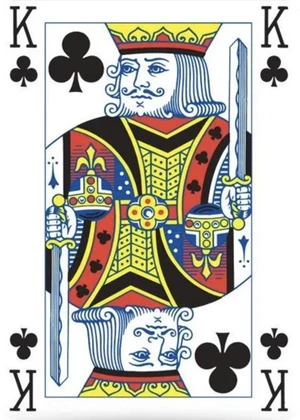 The British classic
The pack found in British homes for generations. Paper cards with a linen finish that fan and shuffle smoothly.
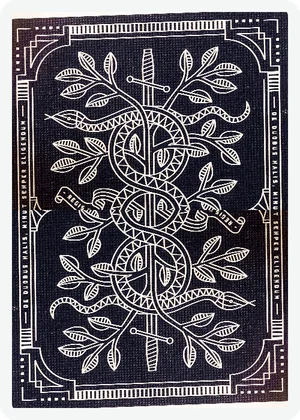
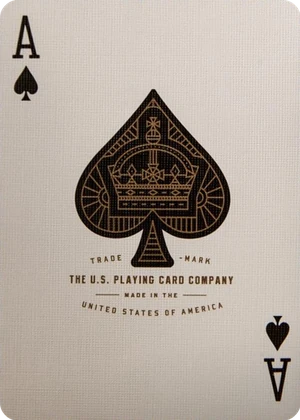 The gift
A luxury deck with a navy and gold tuck box. The one to give, or to bring out when the good whisky is poured.
Avoid the hearts and dodge the queen of spades.
4 players · 45 min · 10+A fast partnership game with 24 cards and two powerful jacks.
4 players · 30 min · 10+The classic partnership trick game. Win the most tricks with your partner.
4 players · 30 min · 10+