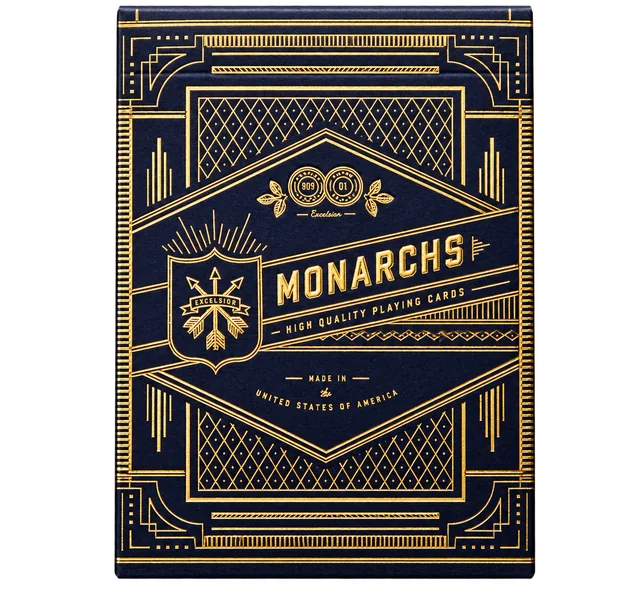
 theory11 MonarchsPrice: About $40, roughly.
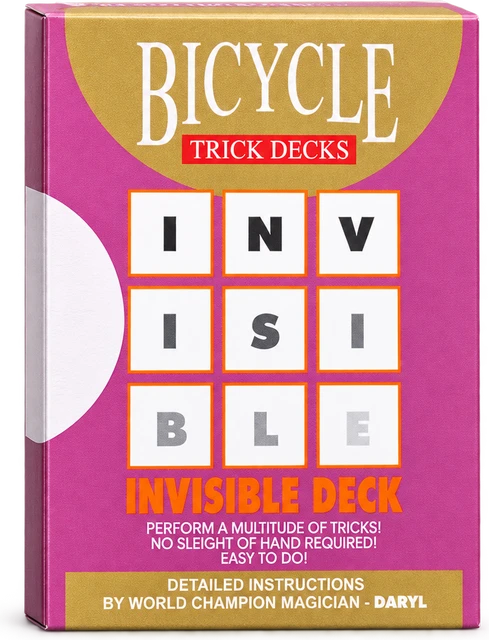
Bicycle Invisible Deck · Bicycle trick deckPrice: About $10, roughly.
For magic tricks
A classic trick deck: a friend names any card, and it turns out to be the only one upside down in the deck.
- Good for
- Magic · Parties
- Skip it if
- You want to play real card games: this is a trick deck, and a fun one, but only one trick.
Buy now ↗on Amazon
Our take
A classic trick deck: a friend names any card, you spread the deck, and the card they named turns out to be the only one facing the other way. It is one trick, but a good one, and it is easy enough to learn in an afternoon.
This is not a deck for playing Hearts. Think of it as a party piece and a gift for anyone curious about magic.
If you want to play real card games, pick one of the other nine decks, and keep this one in your pocket for later.
Test drive
Play one round against three players. The cards are shuffled for you, the others play by the rules, and nothing is saved.

Keep reading
- Buying guide
Choosing a deck
Plastic or paper, poker or bridge size, how many decks you need, and the deck we recommend for each of our games.
- Basics
Anatomy of a deck
Fifty-two cards, four suits, thirteen ranks and a couple of jokers. What everything is called, and a few details you have probably never noticed.
- Basics
How to shuffle and deal
Three ways to shuffle, how many shuffles you really need, and the small table manners of cutting and dealing.
Quick answers
- Paper or plastic?
Paper shuffles with more grip and costs less. Plastic lasts for years, shrugs off spills and feels a little slicker. If you play every week, or with drinks nearby, go plastic.
- What size do I need?
Poker size suits most games and most hands. Bridge size is narrower, which helps when you hold thirteen cards or more.
- How many decks do I need?
One for most games. Canasta, Spider and some Rummy variants need two with matching backs.
Also consider
Back to the shelf →theory11 MonarchsPrice: About $40, roughly. 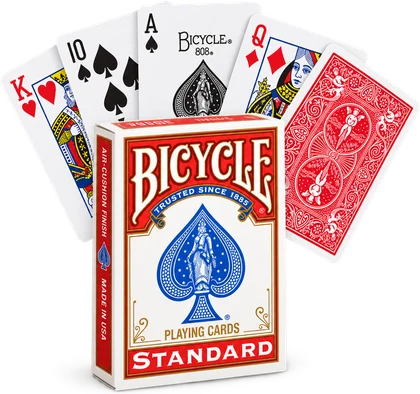 Bicycle StandardPrice: About $5, roughly.
Our house deck
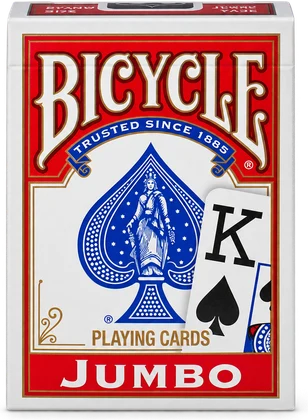 Bicycle Jumbo IndexPrice: About $6, roughly.