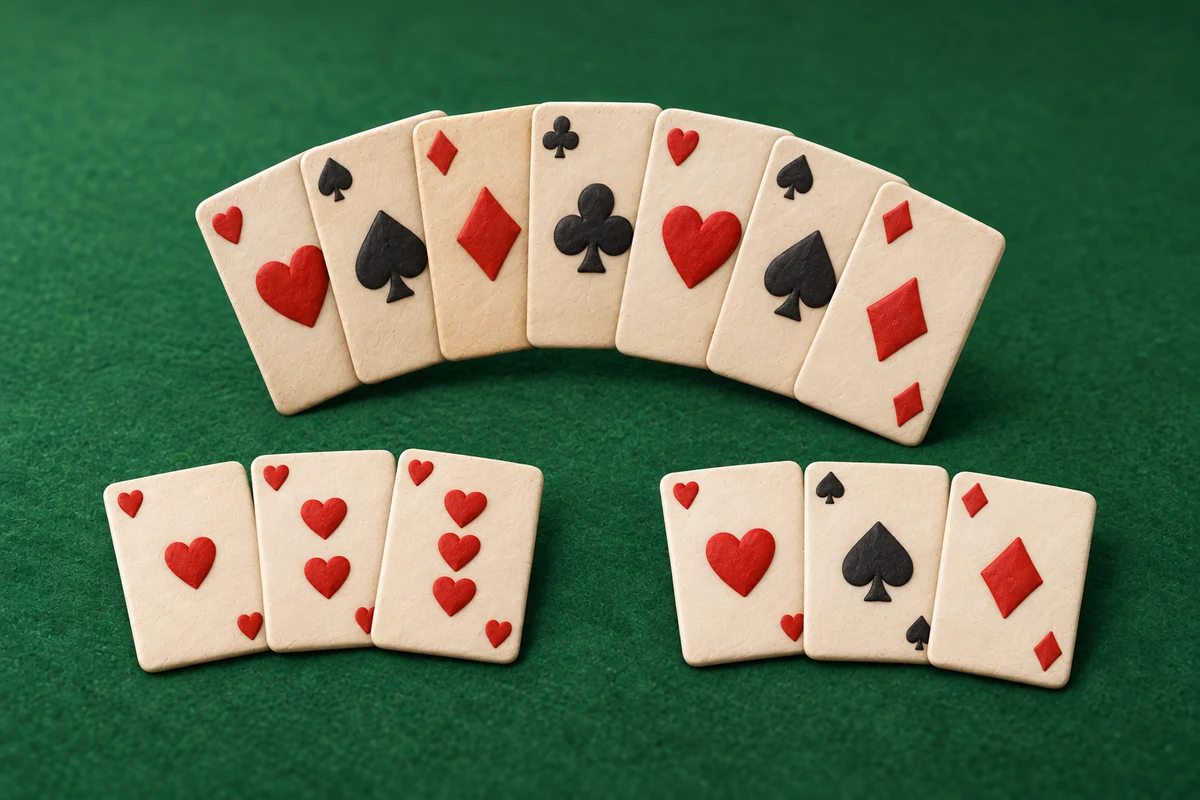
Both games are about the same two shapes: sets (three or four of a rank) and runs (three or more in a row in one suit). Each turn you draw a card and discard one. The difference is when your melds come out. In Rummy you lay them on the table during play. In Gin Rummy they stay in your hand until the hand ends.
| Rummy | Gin Rummy | |
|---|---|---|
| Players | 2 to 6 | 2 |
| Cards | One 52-card deck | One 52-card deck |
| Deal | 10 each with two players, 7 with three or four, 6 with five or six | 10 each |
| Melds | Laid on the table as you go; you can add to anyone’s | Kept in your hand until the hand ends |
| Ending a hand | Get rid of every card | Knock with 10 or less unmatched cards, or go gin with none |
| Scoring | The winner scores the cards left in the other hands | Score the difference in unmatched cards; gin and undercuts earn bonuses |
| Game | First to an agreed target, for example 100 | First to 100 |
| Feel | Open and social | Tight and tactical |
Choose Rummy if
- you have three or more players
- you want everyone to see the melds and join in
- you are teaching beginners
Choose Gin Rummy if
- you are two
- you like reading your opponent and timing the knock
- you want a game with more depth over many hands
Learn Rummy first if you are new: it shows every meld on the table. Gin Rummy is the natural next step for two.
One standard deck plays both. Ours: Bicycle Standard →